Gerberngasse 21a
3011 Bern
Haus Matto
A house for an artist and a musician
Planning and execution
2016–2017: Planning and implementation
Architects
Client
Private
Civil engineers
Normal Office, Peter Braun
Other
Timber construction: Oeko Isol
Description
This small house in Bern’s Matten district was built in 1941–42 as a workshop for a joinery business on a former garden plot directly beside the Gewerbekanal, and forms part of a cluster of small-scale commercial buildings in the classical style found in the surrounding area. It is a decidedly simple two-storey workshop building, yet one designed with considerable architectural care and quality. The ground floor is of solid construction. On the upper floor, the construction method changes to timber framing with ventilated board cladding featuring precise joint spacing.
With the change of ownership, the house was to serve a new purpose. On the one hand, it is being converted for residential use; on the other, it serves as an archive, exhibition space and art studio. The new owners are active in the fields of music and the visual arts. The ground floor, originally designed as a workshop, was to retain its structure as an open-plan space. Consequently, the kitchen was designed along the perimeter of the room, adjacent to the fire wall. A double-sided metal shelving unit within the room provides storage for both the entrance hall and the kitchen. Acting as a room divider, this element features a translucent double-webbed panel as a rear wall, creating visual connections to the other side.
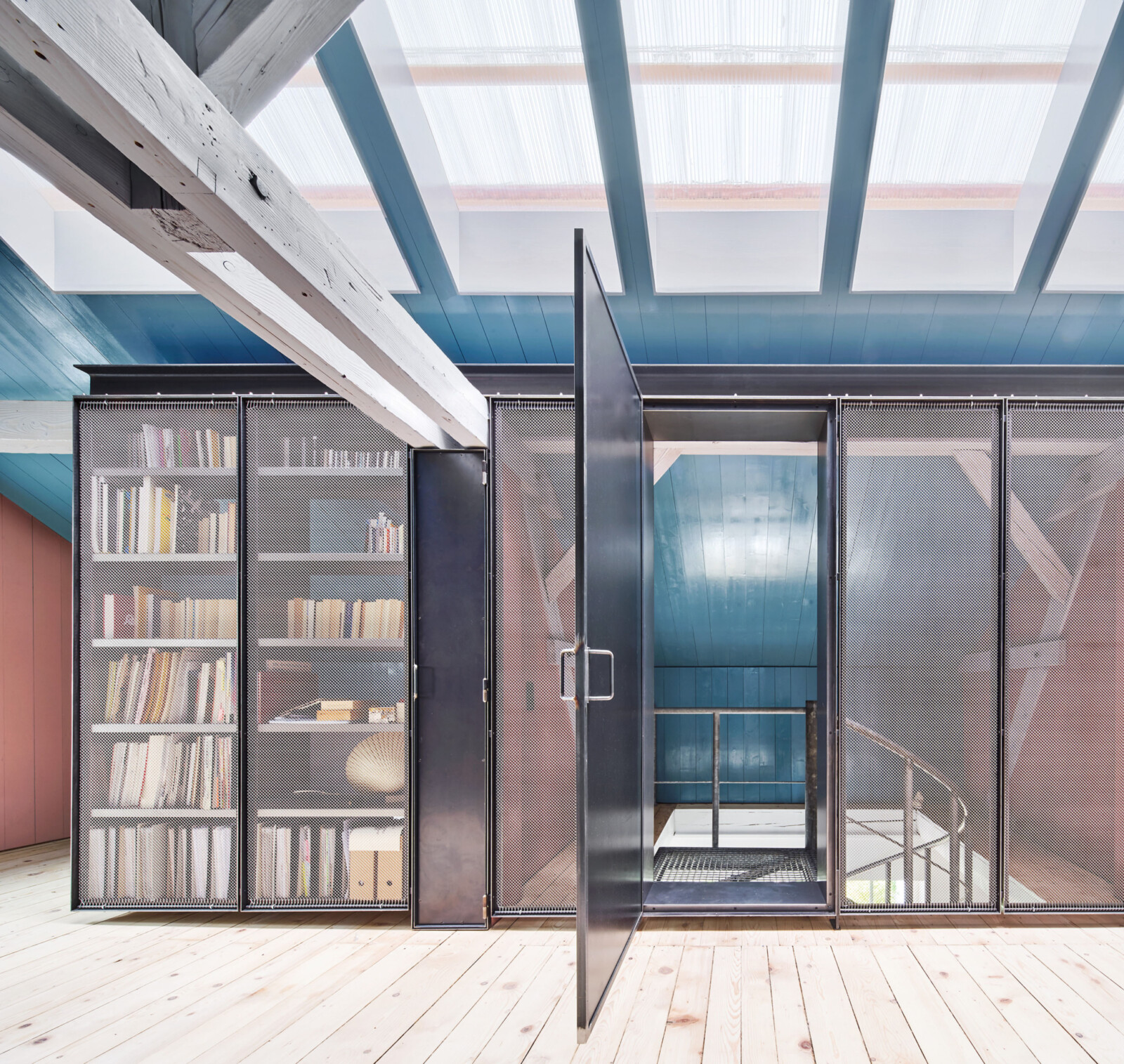
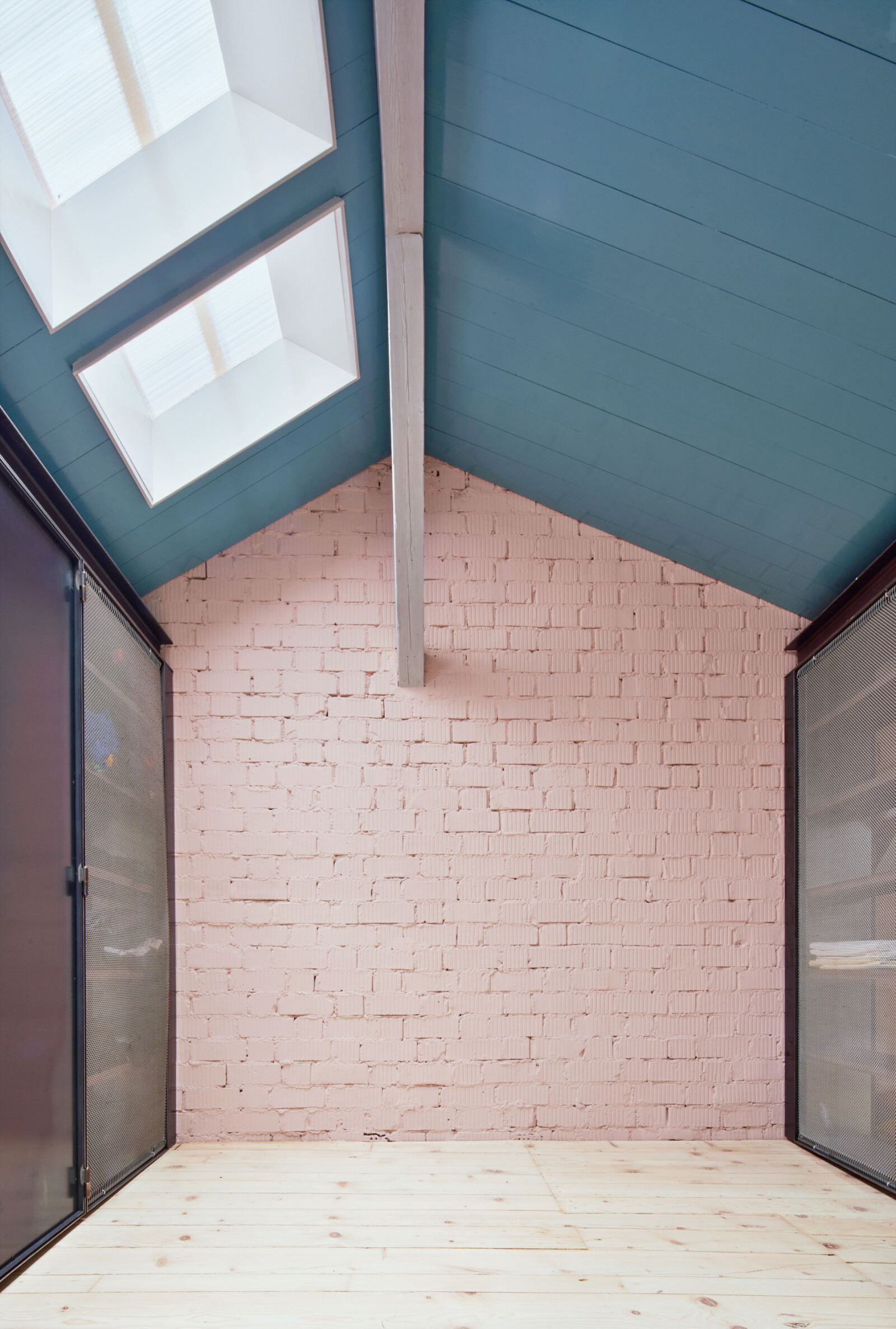
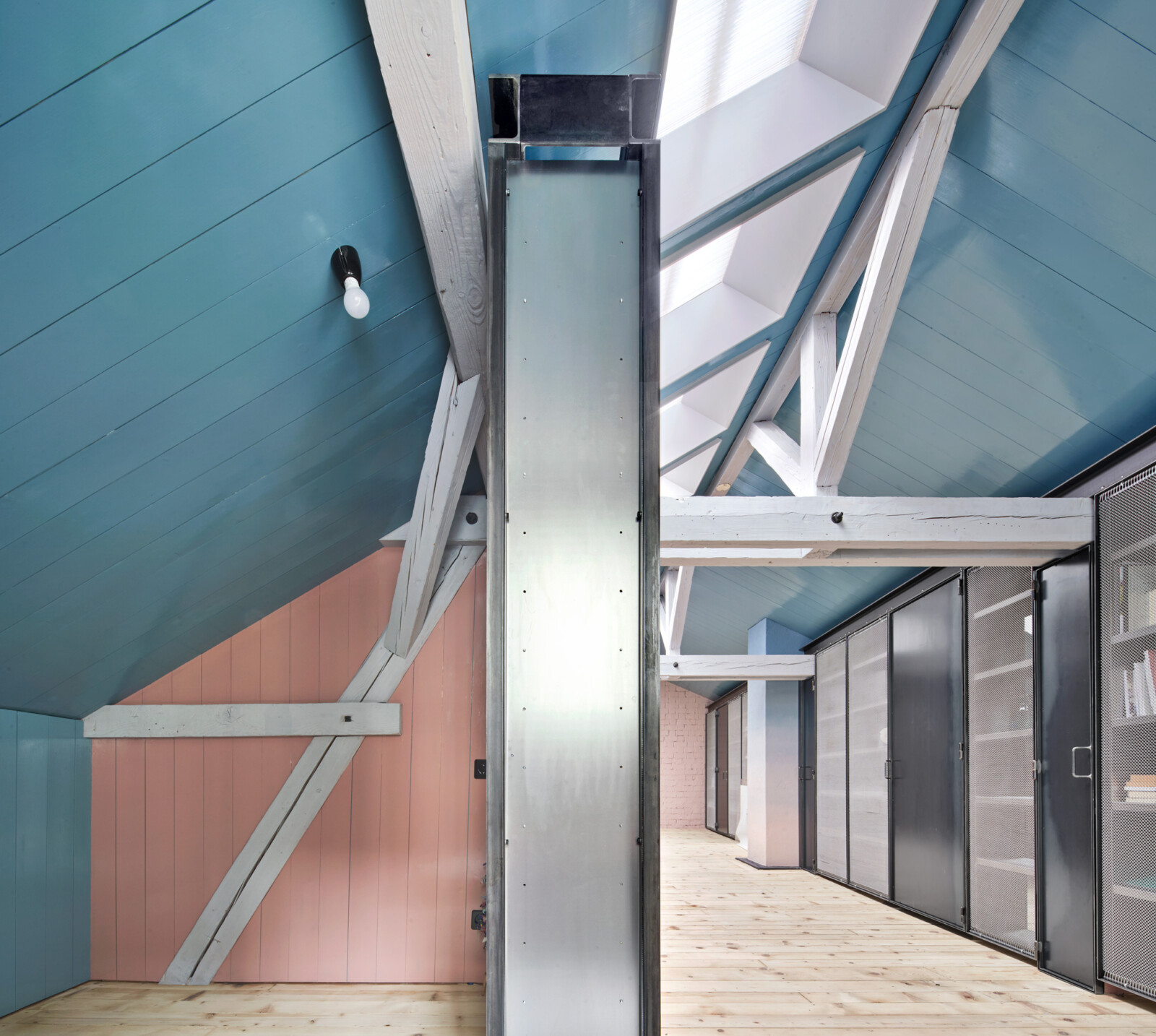
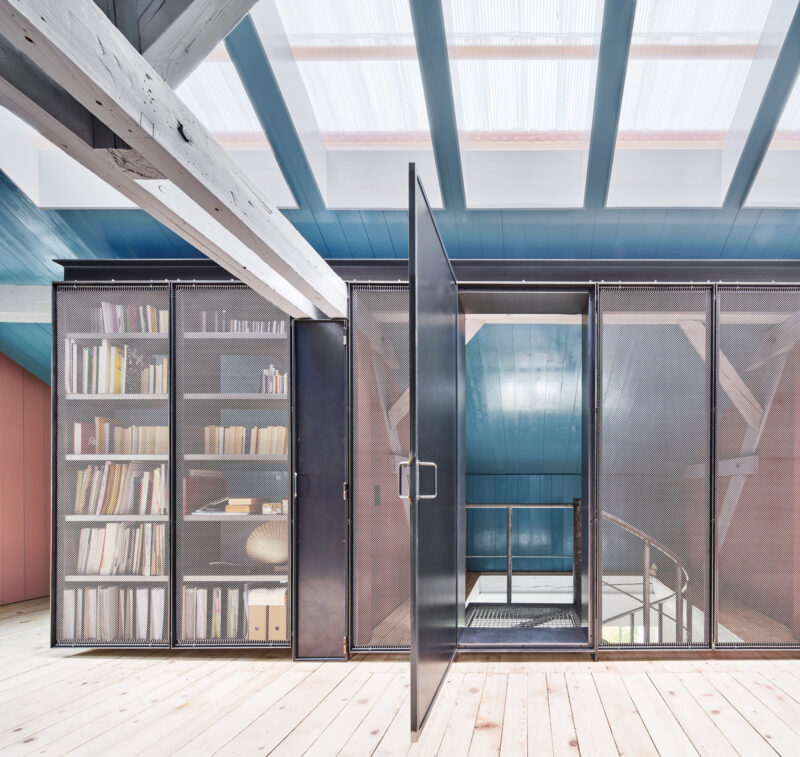
The free-standing metal spiral staircase is retained to connect to the floor above. The upper floor was stripped of its lightweight structures, leaving only the timber truss framework, and redesigned. A long room extends centrally beneath the gable and across the entire depth of the building. With its dimensions and a series of light-filled roof openings, this serves not only as a distributor but also as a living space. On both sides of the roof pitch are chambers which accommodate functional areas such as the bathroom, bedroom, dressing room and access space. Each is separated from the main room by a row of metal modules. The modules are inspired by filing systems. They serve both as storage space, accessible from the rooms, and as passageways. Each module is designed so that it can be detached from its support at a later date and installed or positioned independently elsewhere. The individual modules are suspended and bolted to steel beams, hovering slightly above the non-load-bearing wooden floor. The steel beams, in turn, are laid across the wooden trusses of the roof structure, which now supports the entire interior of the upper floor. (Copyright: Camponovo Baumgartner BSA SIA)
Visits and guided tours
Type of tour: Guided group tours; no individual tours
Registration: required
Group size: maximum 20 people
Meeting point: in front of the entrance in the garden
Guided Tours
Sunday, 11:00-11:30 - Luca Camponovo (Architekt)
Sunday, 11:30-12:00 - Luca Camponovo (Architekt)
Directions
Bus no. 12 from Bern railway station to "Nydegg"
Location
Gerberngasse 21a
3011 Bern