



Melchenbühlweg 26
3006 Bern
Ougspurgergut
Discover garden art and building culture with Hermann Hesse
Planning and execution
Second half of the 18th century: Construction of the Ougspurgergut estate (architect unknown)
1920: Alterations (architect unknown)
1935: Alterations (architect unknown)
2009–2010: Renovation and conversion of the farm buildings into flats (Von Graffenried Bissig Architects)
Architects
Von Graffenried Bissig Architects
Client
Senn Foundation (refurbishment 2009)
Description
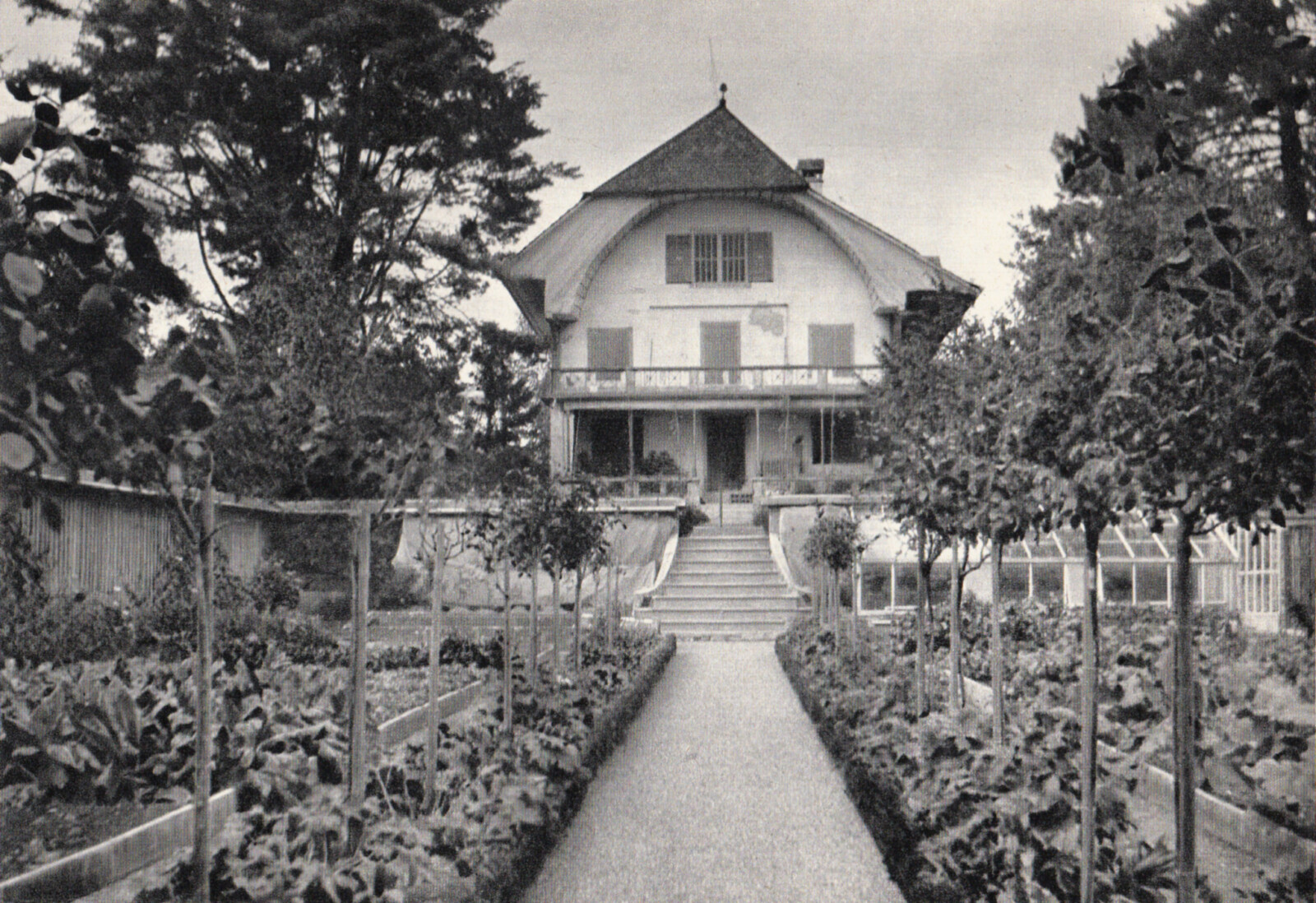
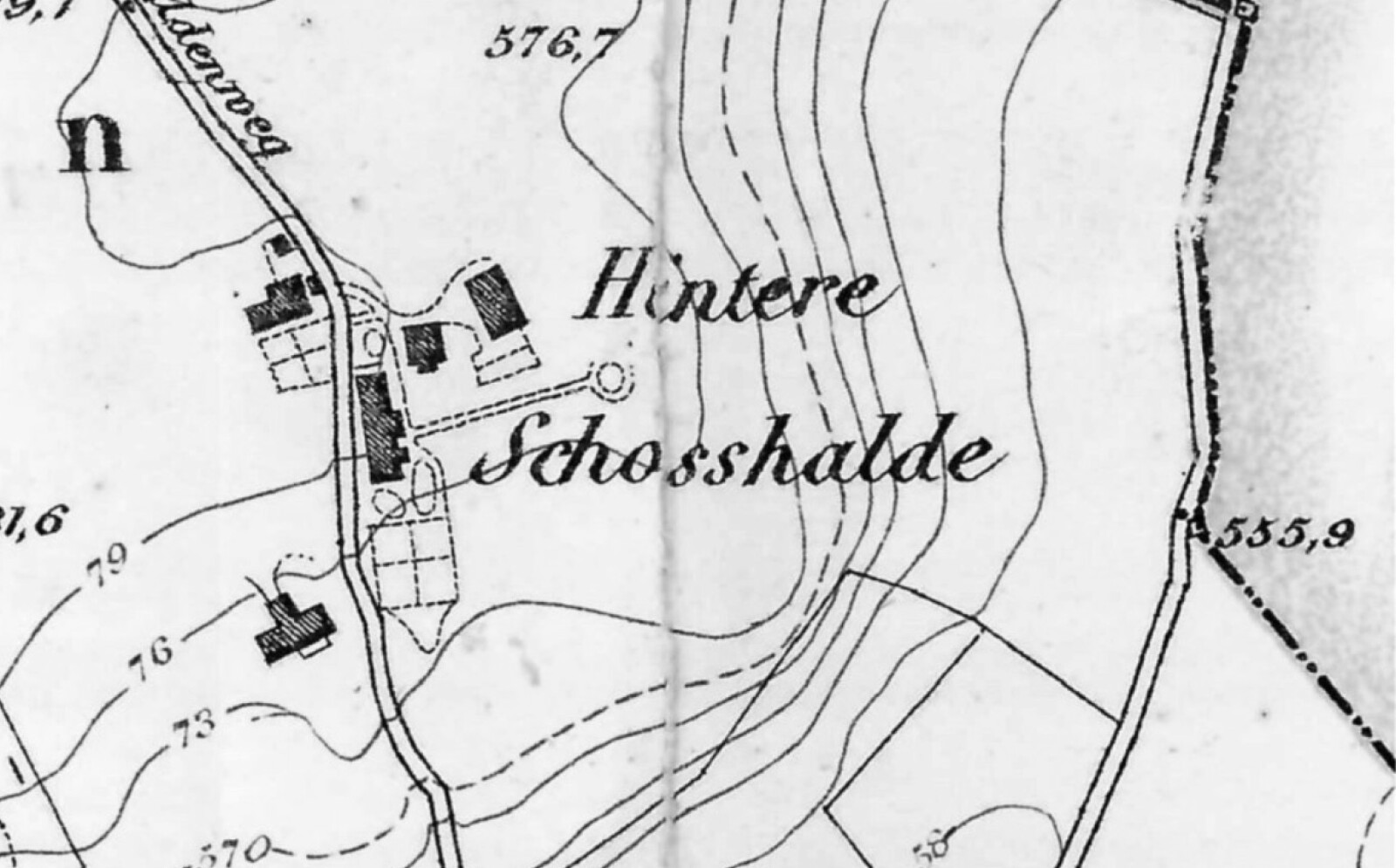
Country estate: Perched on high ground with views stretching across the Wittigkofen and Melchenbühl areas towards the Alps stands this simple Bernese country estate, formerly known as ‘Grosse Matte’ or ‘Hinteres Schosshaldengut’. After changing hands several times amongst prominent patrician families, it came into the possession of Captain Ludwig von Ougspurger in 1836. The oldest parts of the estate are already documented on plans dating back to the early 18th century, whilst the Mülleratlas of 1799 shows the complete building in its full length. A striking feature is the three-axis, centrally positioned sandstone building with a transverse gable, projecting eastwards as a risalit. Adjoining this is the southern residential section with a brick-built and plastered ground floor, above which is a first floor now clad in white shingles beneath a slightly asymmetrical hipped roof. A colonnaded peristyle has been added across the entire width of the simple, three-axis south façade. Attached to the north is the barn section, featuring the same structural elements but without cladding, thus revealing the timber-framed structure. Openwork and a row of four round openings in the gable adorn the otherwise closed front elevation. All structural elements are united under a single, imposing roof. The terraced grounds, featuring a polygonal garden pavilion with Tuscan columns and a curved dome at the southern end, are extremely picturesque and have consequently often served as the setting for Rudolf von Tavel’s stories. At the beginning of the century, the simple Bernese country estate was home to the painter Albert Wälti, whilst during the Second World War the poet Hermann Hesse lived here. The Ougsburg Estate forms a successful symbiosis of farmstead and countryside. Furthermore, it is the only complex in the area featuring a peristyle with a terraced garden in front of it, and is thus of great art-historical value. (Copyright: Building Inventory 2017, Heritage Conservation of the City of Bern)
Gardens: The Ougsburgergut boasts two valuable garden complexes dating from the 18th and 19th centuries, which are important examples of stately garden design within the city of Bern. The juxtaposition of Baroque and landscape garden design is of great artistic and art-historical value. One of the best-preserved country estates in eastern Bern. (Copyright: City of Bern Garden Conservation)
Visits and guided tours
Type of tour: Guided group tours; no individual tours
Registration: Required
Group size: Maximum 15 people
Meeting point: Melchenbühl entrance, postbox area
Guided tour of part of the estate (Melchenbühlweg 26) and the Baroque gardens.
Guided Tours
Sunday, 10:00-11:00 - Ziu Bruckmann (Gartendenkmalpflege Stadt Bern)
Sunday, 11:00-12:00 - Ziu Bruckmann (Gartendenkmalpflege Stadt Bern)
Sunday, 14:00-15:00 - Ziu Bruckmann (Gartendenkmalpflege Stadt Bern)
Directions
Tram no. 6 from Bern railway station to "Weltistrasse" or bus no. 12 from Bern railway station to "Zentrum Paul Klee"
Location
Melchenbühlweg 26
3006 Bern