Sandrainstrasse 3
3007 Bern
Ryff-Areal
A tour of the former Ryff factory
Planning and execution
1890: Built, architect unknown;
1895–1929 and 1974: various extensions, Lindt & Hünerwadel | J. Ryff | Horace Ed. Davinet | Friedrich Studer
Description
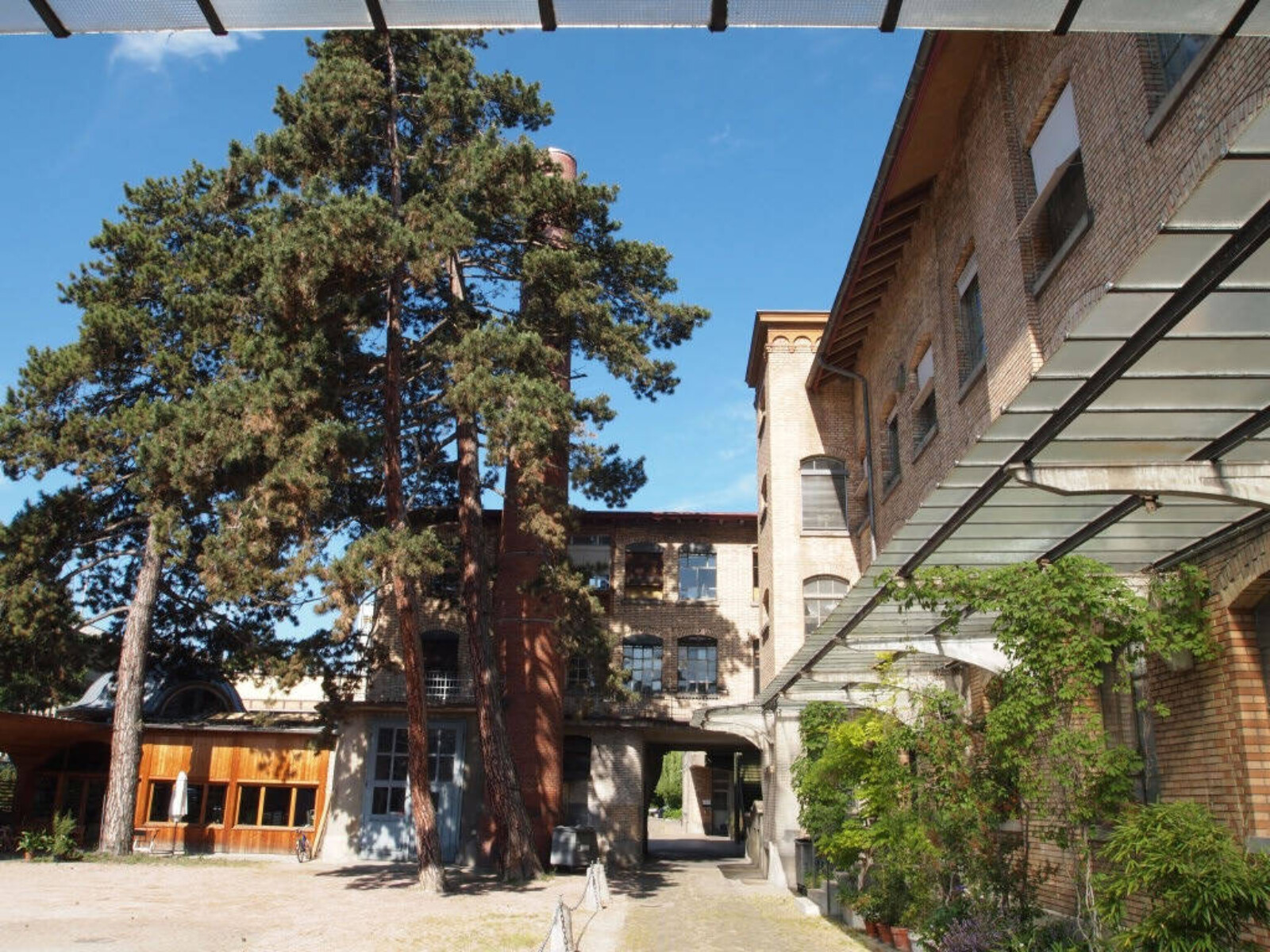
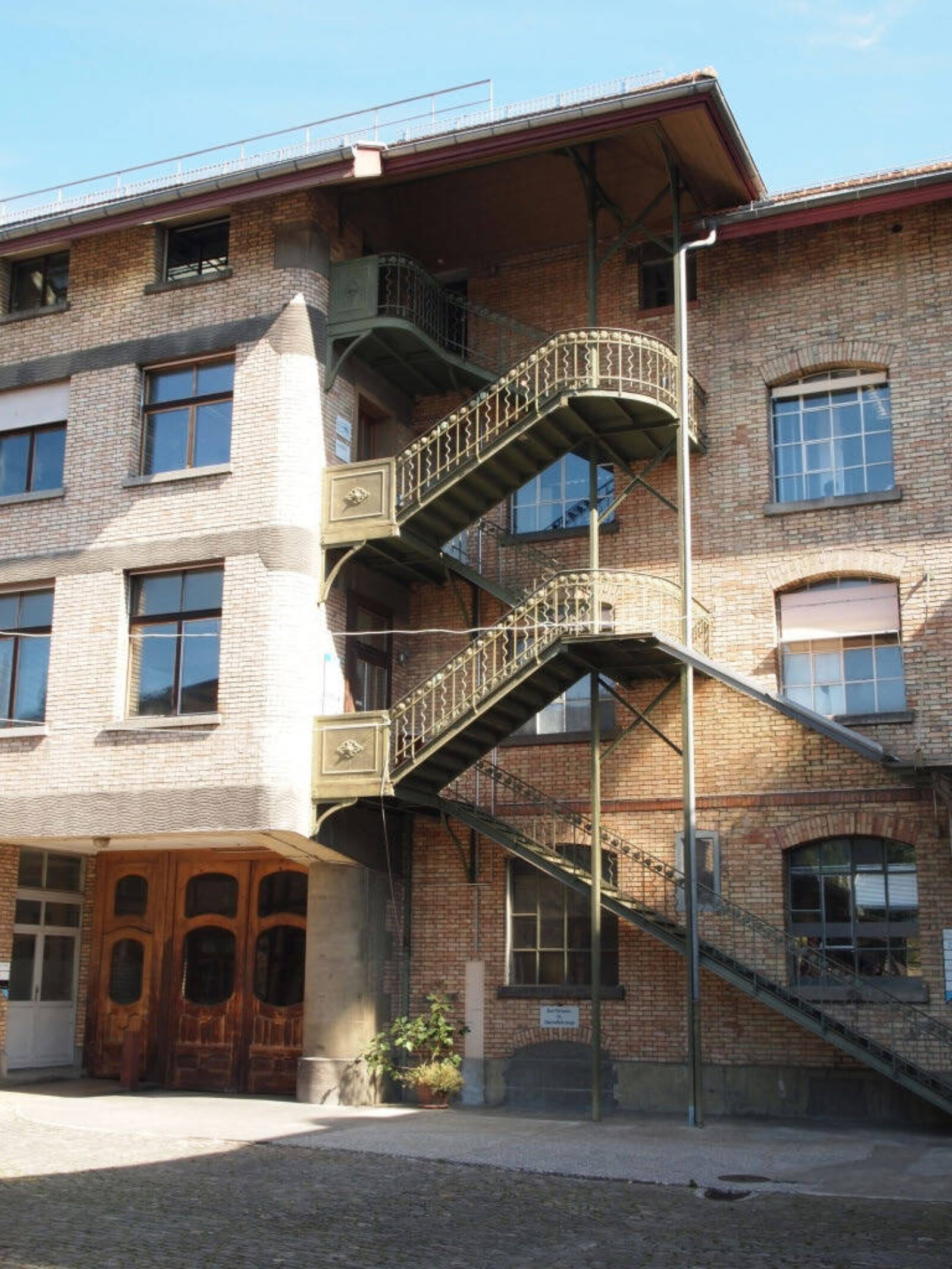
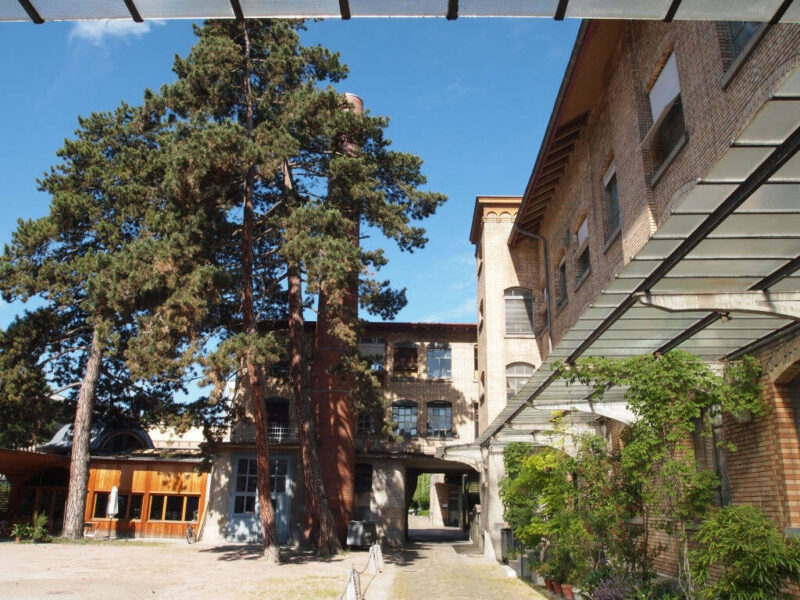
"A multi-part factory complex constructed in three phases. The main building is a three-storey structure of exposed brick, featuring a flat-roofed projection on both the south and north façades that extends beyond the eaves. An initial extension on the east side adopts the design language of the main building. The slightly newer west-facing extension, which now dominates the building’s appearance, represents a structural innovation through the use of reinforced concrete slabs. In contrast to the two older sections of the building, whose façades are predominantly punctuated by pointed-arch windows, the west wing features rectangular wall openings whose lintels are formed by the continuous concrete slabs, which have a wavy, grooved texture. A projection protruding by the thickness of two walls breaks through the eaves of the hipped roof on the west façade and supports a cantilevered flat roof. The rounded corners are repeated in various places on the building. The north-facing balcony projection is covered by a stately hip roof. The west wing features a glazed ridge turret. At its core, the building reveals a dry historicism. Art Nouveau plant motifs can be seen in the balcony and staircase railings of the west wing. This part of the building not only occupies a prominent position amongst Switzerland’s factory buildings but can also be compared to the pioneering European industrial architecture of the time, such as that developed in the circle of the Parisian architect Henri Sauvage. Several ancillary buildings, some designed by well-known architects, are grouped around the main building. The open shelters, constructed of timber and running parallel to Marzilistrasse, also deserve special mention. After the demolition of the factory complex had long been under discussion, renovation work began in 1983."
© Bauinventar 2017, City of Bern Heritage Conservation
Visits and guided tours
Type of tour: Guided group tours; no individual tours
Booking: Not required (first come, first served)
Group size: Maximum 20 people
Meeting point: By the external staircase in the centre of the building (Monbijou Bridge side)
Guided Tours
Sunday, 15:00-15:45 - Tour with David Landolf, Direktor Kinemathek Lichtspiel
Sunday, 16:00-17:20 - Film screening "Asphalte Public" and Q&A with director Jan Buchholz
Sunday, 18:00-18:45 - tour with David Landolf, Direktor Kinemathek Lichtspiel
Sunday, 20:00-22:00 - Archive program by Lichtspiel
Directions
Tram no. 9 or bus no. 19 to "Sulgenau"
or a 15-minute walk from Bern railway station
Location
Sandrainstrasse 3
3007 Bern